Paver driveways · Nashville, TN
Paver driveways, built from the base up
Cracked concrete out, interlocking pavers in, laid on a base made to carry a car. Gary McCann prices each one after walking the drive.
What a paver driveway job includes
The old site puts it simply: a driveway remodel replaces what you have with concrete pavers. In practice that is 3 stages of work, in order. First the old surface comes out and leaves the property. Then the ground is dug to depth, graded so rain runs off the drive instead of under it, and built back up with a compacted base. Last, the pavers go down, the edges are locked so the field cannot spread, and the joints are filled.
All three are in one written bid: demolition, materials and labor. Gary prices a driveway only after he has seen it, because the slope, the soil and the amount of old concrete to remove change more from one house to the next than the pavers do.
Why the base matters more than the pavers
A paver drive that sinks, ruts or holds puddles nearly always failed underneath. Drainage is where a driveway is won or lost, and a job reviewed on Houzz shows how Gary handles it when something goes wrong: Andy Slater’s new pavers weren’t draining correctly in heavy rain, and Gary came back more than 6 months after finishing to make it right. Andy’s verdict was that Gary “stands behind our work.”
Patterns, colors and the house
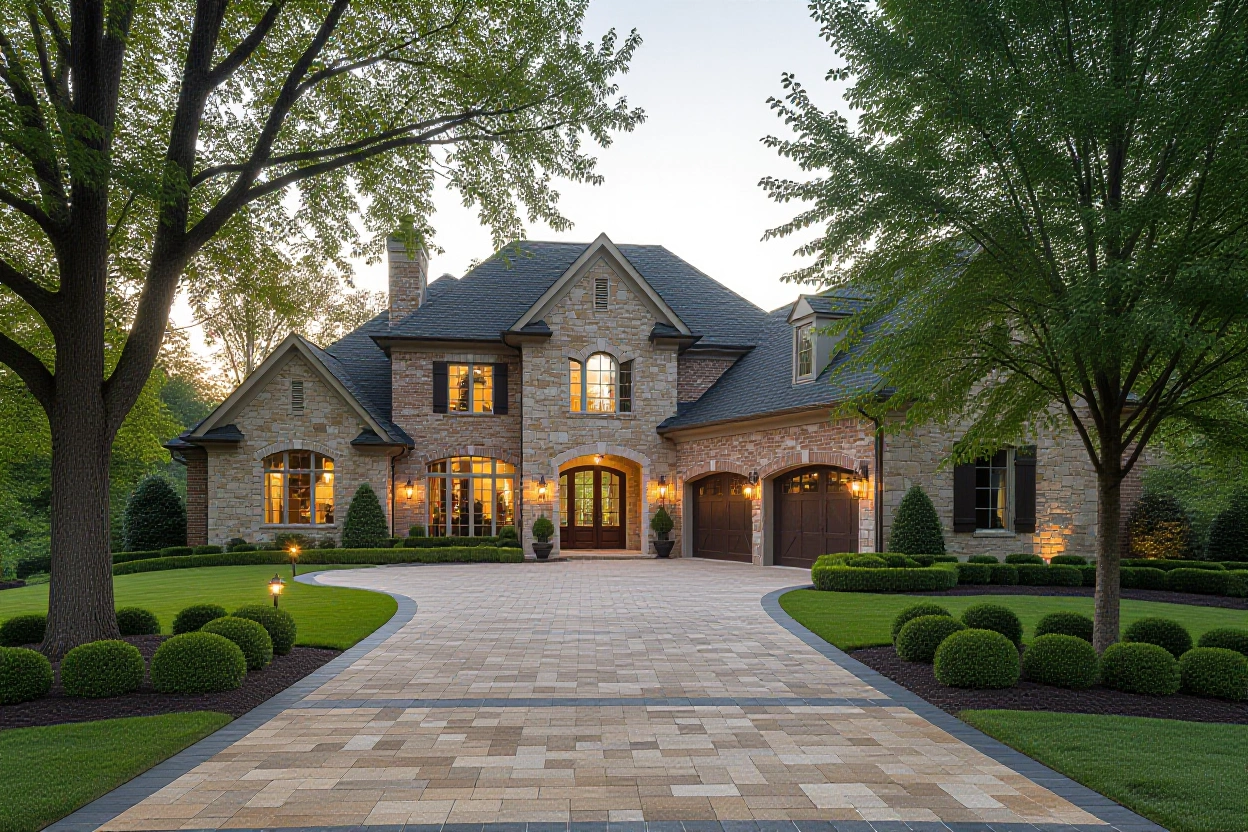
Herringbone is the usual pick where cars turn, because each paver is braced on two sides. Running bond and basketweave suit a straight walk or a path off the drive. Color is easiest to judge outdoors, beside the brick, siding and roof of your own house, so bring that question to the walk-through.
The drive and the front of the house together
A driveway job often grows a little: a walk to the front door in the same pavers, a planting bed along one edge, a gravel bed beside it. The photos below show all three. If the front yard needs work as well, see front yard remodels, and Gary will plan both as one project, whether the house is in Nashville, Brentwood or Hendersonville.
From the portfolio
Driveways the family has built
Answers
Paver Driveways: questions people ask
How much does a paver driveway cost?
Gary prices each driveway after seeing it, because the number turns on the square footage, how much old concrete or asphalt has to come out, the base the ground needs, and the paver and pattern you choose. Tearing out the old drive, the materials and the labor are all written into that one bid.
Is a paver driveway better than concrete?
For most homeowners the difference is repair. A poured slab that cracks has to be cut and patched, and the patch always shows. Interlocking pavers can be lifted and relaid in the same spot with the same pieces. Pavers also come in patterns and colors a slab cannot match, herringbone being the usual driveway pick.
How long does a paver driveway last?
As long as the base under it holds. Pavers fail when the ground beneath them settles or water has nowhere to go, so most of a driveway job is the digging and compacted base you never see. When one client’s pavers drained badly in heavy rain, Gary returned months later and fixed it.
How soon can I drive on new pavers?
Usually as soon as the last section is laid, compacted and its joints are filled, because pavers do not cure the way poured concrete does. Plan on a few days without the driveway while the old surface comes out and the base goes in. Gary gives you those dates when he sets the schedule.
What paver pattern is strongest for a driveway?
Herringbone, laid at 45 or 90 degrees, is the pattern most installers choose where cars turn, because each paver locks against its neighbors on two sides and resists creeping. Running bond and basketweave work well on walks and patios. Tell Gary at the walk-through which look you like, and he will lay out how each would sit against the house.